
Scientist of the Month
April 2025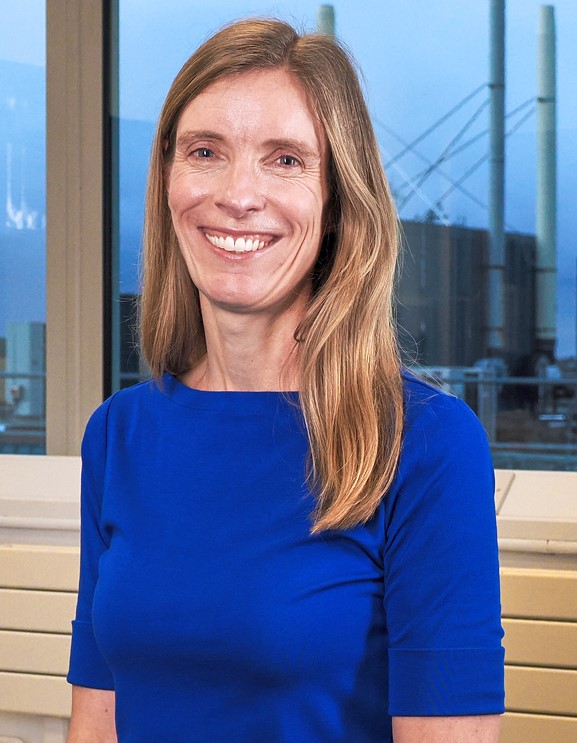
Prof. Emily Farran
Professor of Cognitive Development
School of Psychology, University of Surrey
Area(s) of Expertise
Languages Spoken
I am the director of the Cognition, Genes & Developmental Variability Lab. I started this lab at University College London (UCL), and it is now based at the University of Surrey.
My research examines how children’s thinking develops, particularly their ability to understand and utilize space (spatial cognition). I am interested in both typical development and how it might differ in children with neurodevelopmental conditions.
A big part of my work is exploring how spatial thinking relates to achievement in Science and Mathematics. I mainly work with primary school children and people with neurodevelopmental conditions.
Description of her work
My current work includes:
- Open Science and Research Transparency: I established the Surrey Open Research Working Group in 2019 and led the team on University-wide initiatives. With colleagues, I launched and annually update the “Open Research across disciplines” resource.
- Accessible Research: I value the translation of research outputs into accessible, usable outputs (see our Spatial Reasoning platform for examples). I was awarded the 2024 Impact and Engagement award from the Developmental Psychology section of the British Psychological Society for my efforts in this area.
- Setting Research Priorities with Genetic Syndrome Communities: I recently led a priority-setting exercise for genetic syndrome communities. This was launched in June 2024.
- Spatial training programs: I am researching spatial training programs for children and their impact on mathematics and STEM (Science, Technology, Engineering, and Mathematics) more broadly, with a focus on inclusion. For example: Spatial Cognition to Enhance mathematical learning (SPACE).
- I am also researching what thinking skills and classroom environments help children with genetic syndromes in their mathematical learning: Mathematical Inclusion and Neurodiversity.
Key Findings
- In our priority setting exercise, the Down Syndrome, Fragile X Syndrome and Williams Syndrome communities stated that they were dissatisfied with the dominance of basic science research; they weighted research that will directly affect their everyday lives, such as education, as just as necessary. They recommended that people with lived experience inform research and that research findings are made accessible. Cristescu, L., Scerif, G., Pellicano, L., Van Herwegen, J., & Farran, E. K. (2024). Shape Research, Change Lives: Setting priorities in genetic syndrome research.
- In the SPACE programme, we found that a teacher-delivered whole-class Lego training programme significantly improved the spatial and mathematical performance of 6- to 7-year-olds. Teaching children to think and work spatially is an evidence-based, inclusive way to future-proofing the next generation to meet the demands of the AI and data-driven employment revolution. Farran, E. K., Gilligan-Lee, K.A., Mareschal, D., Zivkovic, M., Bartusevica, S., Bell, D. Jay, T., & Gilmore, C. (2025). Teacher delivered block construction training improves children’s mathematics performance. Mind, Brain, and Education.


 English
  Spanish
  French