
Each month, we share insights from one of our network’s extraordinary researchers.
Each month, we share insights from one of our network’s extraordinary researchers.
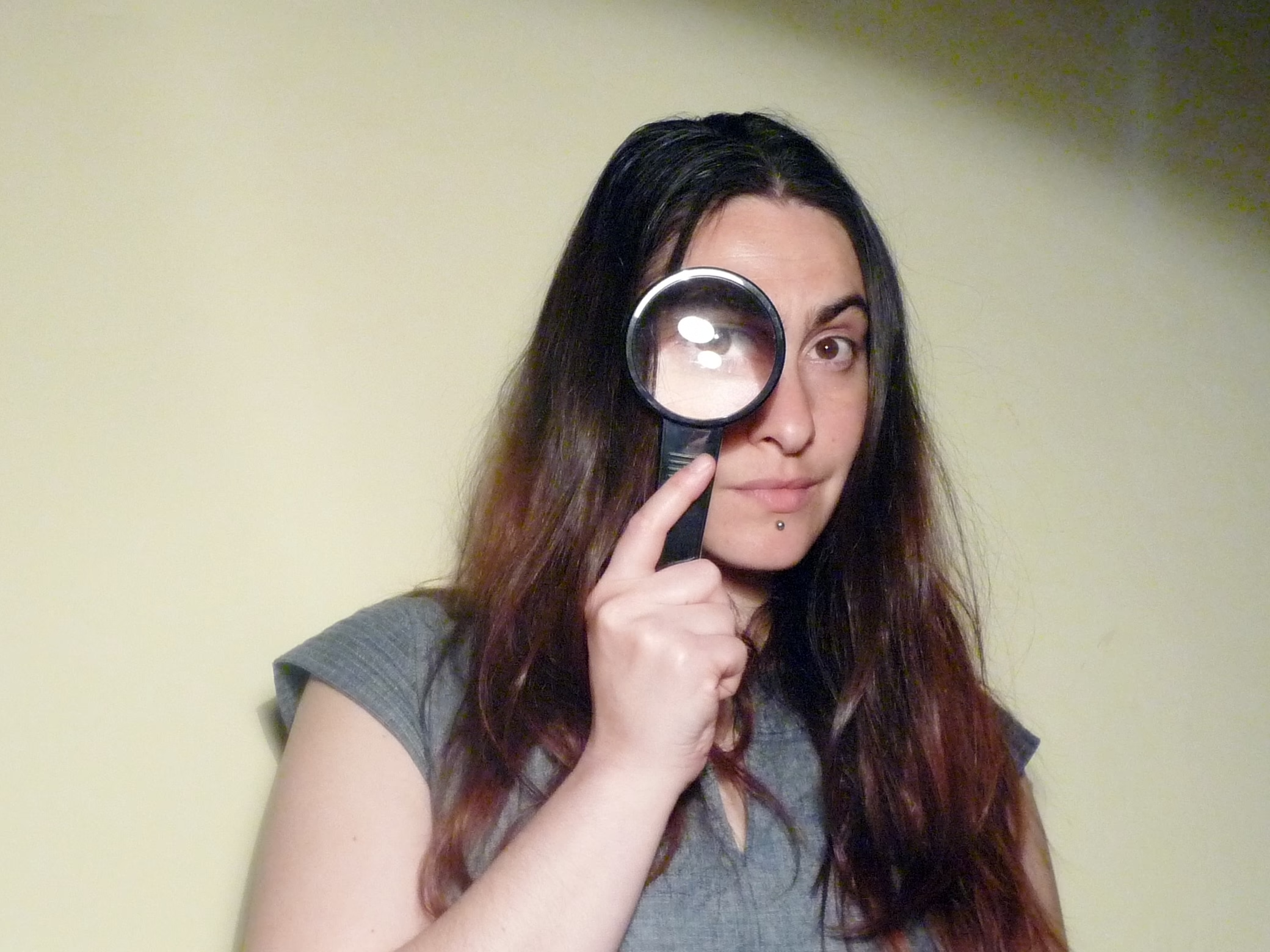
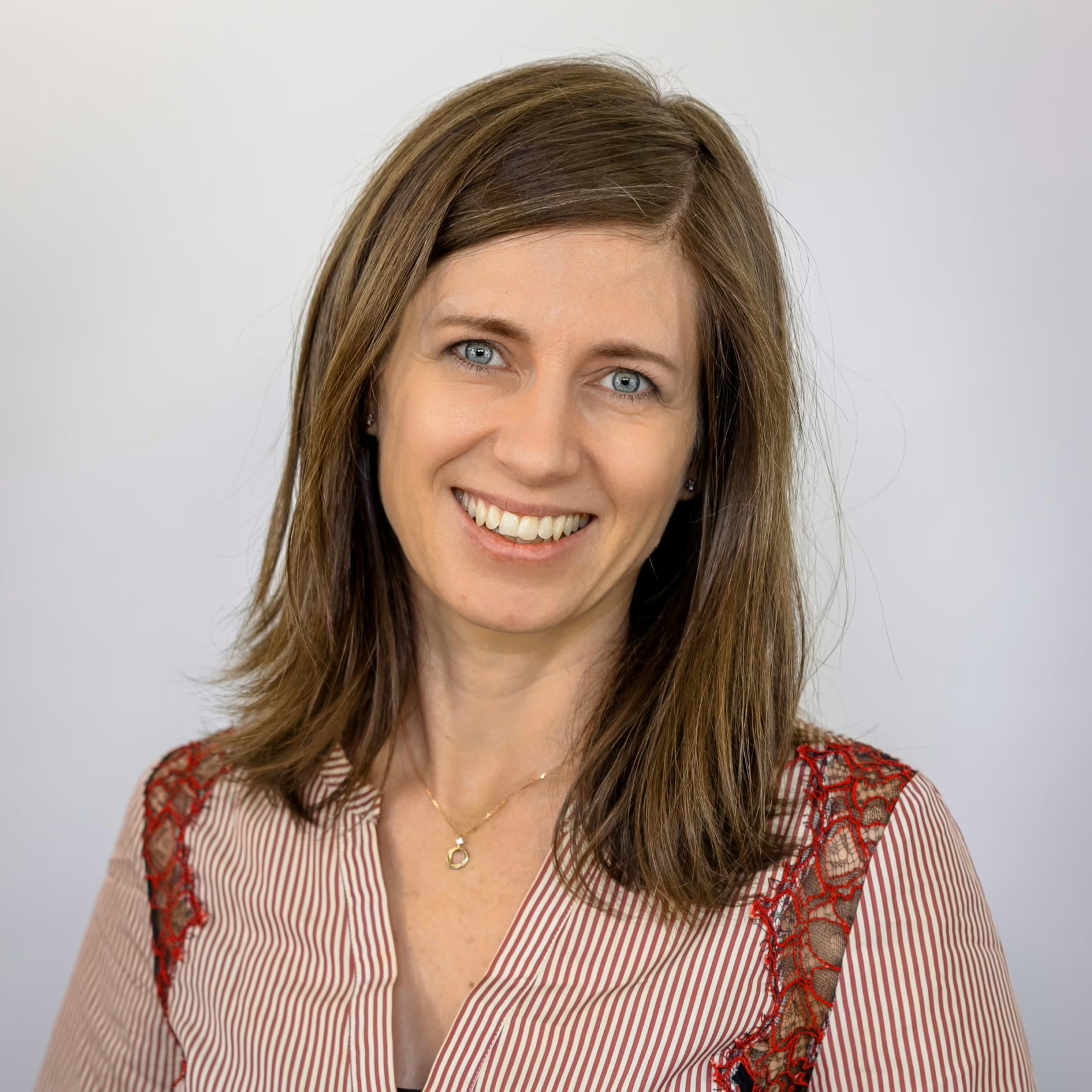
Dr. Andrea Paula Goldin
Researcher, National Scientific and Technical Research Council. Buenos Aires, Argentina
Dr. Andrea Goldin is a biologist who spent eight years doing basic neuroscience research in chronobiology, molecular biology, and behavior in animal models before she found her place. Since 2008, she has dedicated her time, mind, and heart to Educational Neuroscience, where she runs research lines with children, adolescents, and adults.
Her main question concerns the transfer of knowledge to real-world contexts: what do we actually learn that is useful for everyday life while we are practicing something else? She once ran tightly controlled laboratory experiments, but she increasingly prefers real-world settings such as schools and homes. All her research has an applied side, because her personal objective is to use science to impact society and help build a more just world.
Description of her work
Dr. Goldin’s main research line is a scalable, adaptive, gamified, free-to-access cognitive and self-regulation “booster” that has been tested for more than 15 years in Ibero-American schools. She seeks to understand why interventions work differently across children and contexts, how that variability can inform more equitable educational practices, and how interventions can realistically work at scale in real-life educational settings. Recently, her team has been adapting this self-paced tool as a complement for adults, aiming to slow or prevent cognitive deterioration.
Beyond this project, she works on critical thinking, chronoeducation, screen use, AI, and STEM education, applying interdisciplinary approaches to strengthen learning and teaching in diverse contexts.
A central part of her work is translational. Dr. Goldin believes the knowledge scientists produce must “leave the lab” and reach local communities, and that scientists are also responsible for making this happen. To that end, she teaches and conducts outreach: she gives talks for the general public, designs and co-creates activities with the educational community, and engages with the media and government leaders at every opportunity. Committed to bringing the latest advances in the Science of Learning to Latin America, she seeks to engage and challenge policymakers and politicians, encouraging reflection.
Key findings and reflections
The brain is a learning machine, and it learns all the time, very well, and throughout our entire lives. The question is how to make the experiences we go through every day—in school, on the street, in our homes—translate into learning that we consider useful and appropriate.
Her current reflection centers on the purpose of school: “What is the goal we seek for school? What do we want the school, as an institution, to serve society for?”









 English
  Spanish
  French